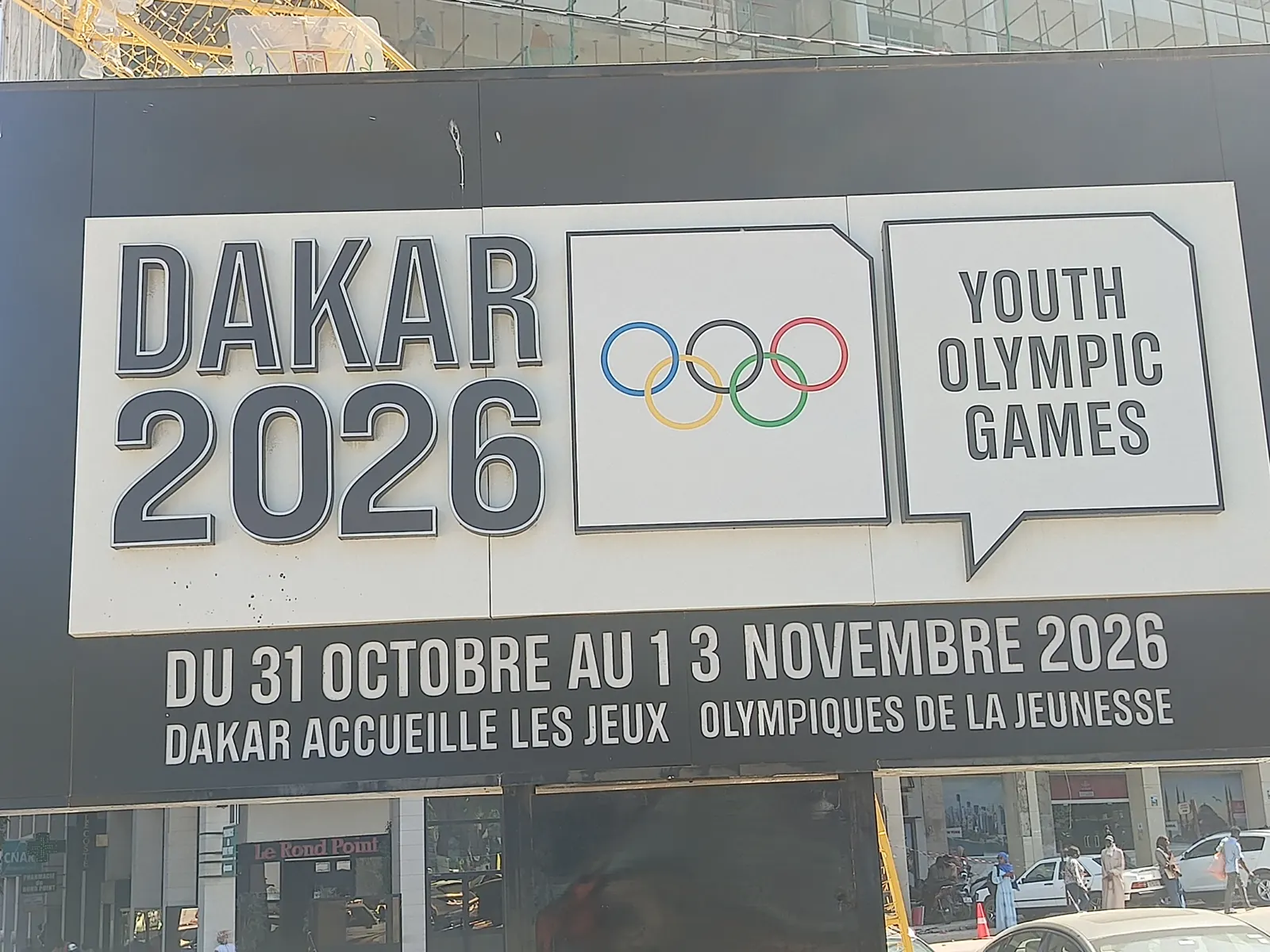
The Youth Olympic Games ended in Senegal on 13 November 2026 with a closing ceremony at the athletes’ village in Diamniadio. It was the first Olympic event held in Africa. The fortnight of competition took place across Dakar, Diamniadio and Saly; the facilities refurbished for it now face a different task. At Dakar’s Iba Mar Diop stadium and Tour de l’Œuf swimming complex, Senegal has buildings it formally received before the Games. The public question after the closing ceremony is how schools, clubs, nearby residents and people who cannot pay regular admission will be able to use them. [1] [2] [3] [6] [8]
Senegal won the bid in 2018. The International Olympic Committee and Senegal agreed in 2020 to move the event from 2022 to 2026, after the pandemic disrupted the sporting calendar. The extra time did not turn the bid into an entirely new construction programme. Two prominent sites in the capital were refurbished, and the development programme also includes facilities meant for use in neighbourhoods outside the competition circuit. The distinction matters now: meeting the standards for a scheduled international event and offering places where residents can practise regularly require different kinds of spending and different schedules. [3] [4] [5] [8]
On 25 July, Senegal’s presidency reported that President Bassirou Diomaye Faye had formally received the renovated Iba Mar Diop stadium and the Olympic swimming pool at Tour de l’Œuf. The stadium complex in Médina can host several sports; the pool is part of a larger site used for other events as well. The presidency also identified improvements to roads and a cultural space for leather work. The IOC says the latter was intended for artisans working near the stadium. Those are distinct parts of the redevelopment. Receipt of the sports venues is documented; it does not by itself establish when nearby artisans will get access to the cultural space or on what terms. [3] [5] [6]
The French development agency AFD lists €80 million in lending for the infrastructure project, with the Republic of Senegal identified as the beneficiary. It says Senegal requested three loans supporting work at Iba Mar Diop, Tour de l’Œuf and eleven neighbourhood sports sites in greater Dakar. This is lending for a named programme, not a figure for all Games spending or proof that every site has been completed. AFD’s project record describes the neighbourhood investments as a way to broaden access for young people and women. The presidency’s July announcement documents the handover of two major venues; the neighbourhood sites require their own delivery and use records. [3] [4] [5] [7]
The neighbourhood sites matter because a trip to a major stadium or Olympic pool is not the only way to play a sport. AFD describes the smaller facilities as serving districts that lack suitable spaces, without requiring those sites to host Olympic events. A facility close to home can reduce the travel needed to take part, but proximity does not determine who gets an afternoon slot, how equipment is shared or whether local clubs can afford to use it. Those outcomes depend on the rules and people who run each site after construction. [4] [5] [7]
The technical guide published by AFD distinguishes event operations from ordinary operation and maintenance. The organising committee was responsible for fitting sites out and running them for the Games; the guide describes separate work on the management arrangements that follow. It also records a requirement for a subsidised pool tariff for students and disadvantaged residents. That is a design requirement, not evidence of the final amount people will pay, the hours it will cover or the dates on which they can use it. Those details will determine whether a cheaper ticket results in regular access. [3] [4] [5]
Affordability will matter alongside maintenance. The same guide describes how running costs can be covered from a mix of public money and income from activities. A site may need paid sessions or commercial events to help cover staffing and repairs. Those bookings can also compete for time with schools and community users, especially if the most useful hours carry the highest prices. A published timetable and tariff would let people see which users are served first and where the subsidy applies. An operating budget would help show whether public access can continue after the first months. [4] [5]
In the final days of the Games, IOC coordination chair Humphrey Kayange pointed to new infrastructure and experience gained by Senegalese workers as benefits that could outlast the event. That is the organiser’s view of the longer term. The evidence available on 13 November establishes that competition took place and that the two principal Dakar facilities had been received. Whether the investments reach people beyond the competition will be visible in different records: opening times, fees, who is responsible for repairs and which neighbourhood facilities are actually in service. [1] [2] [3] [4] [5]
The closing ceremony marked the end of one use of the facilities. Senegal now has to make the next use practical. For someone in Dakar deciding whether to join a club, take a school group swimming or use a neighbourhood court, the lasting benefit will be measured in time, price and dependable access. Publishing the operating arrangements for the two major venues alongside progress on the smaller sites would give residents a way to see what the investment delivers after the Games. [1] [3] [4] [5] [7]
- [1]Associated Press, via Huron Daily Tribune. Youth Olympic Games end in Senegal with organizers touting Africa’s hosting capability13 November 2026
- [2]International Olympic Committee. “Talent is everywhere”: Humphrey Kayange reflects on Africa’s Olympic moment at Dakar 202611 November 2026
- [3]Presidency of Senegal. Dakar 2026 Youth Olympic Games: The Head of State Receives the Olympic Swimming Pool and Iba Mar Diop Stadium25 July 2026
- [4]Agence Française de Développement. Rénovation et développement des infrastructures sportives de Dakar – Jeux Olympiques de la Jeunesse Dakar 2026Undated project record; accessed 13 November 2026
- [5]Agence Française de Développement. Guide technique: Infrastructures sportivesUndated; accessed 13 November 2026
- [6]International Olympic Committee. Where will the Dakar 2026 YOG take place?Undated; accessed 13 November 2026
- [7]Agence Française de Développement. Les Jeux olympiques de la jeunesse, une coopération franco-sénégalaise en mouvementUndated; accessed 13 November 2026
- [8]International Olympic Committee. Dossier de presse de Dakar 2026Undated; accessed 13 November 2026
Did this publication help you understand the topic?
0 voluntary responses. Browser-based participation; responses are not a representative survey.
We welcome suggestions, contributions and recommendations.
Editorial standards ↗