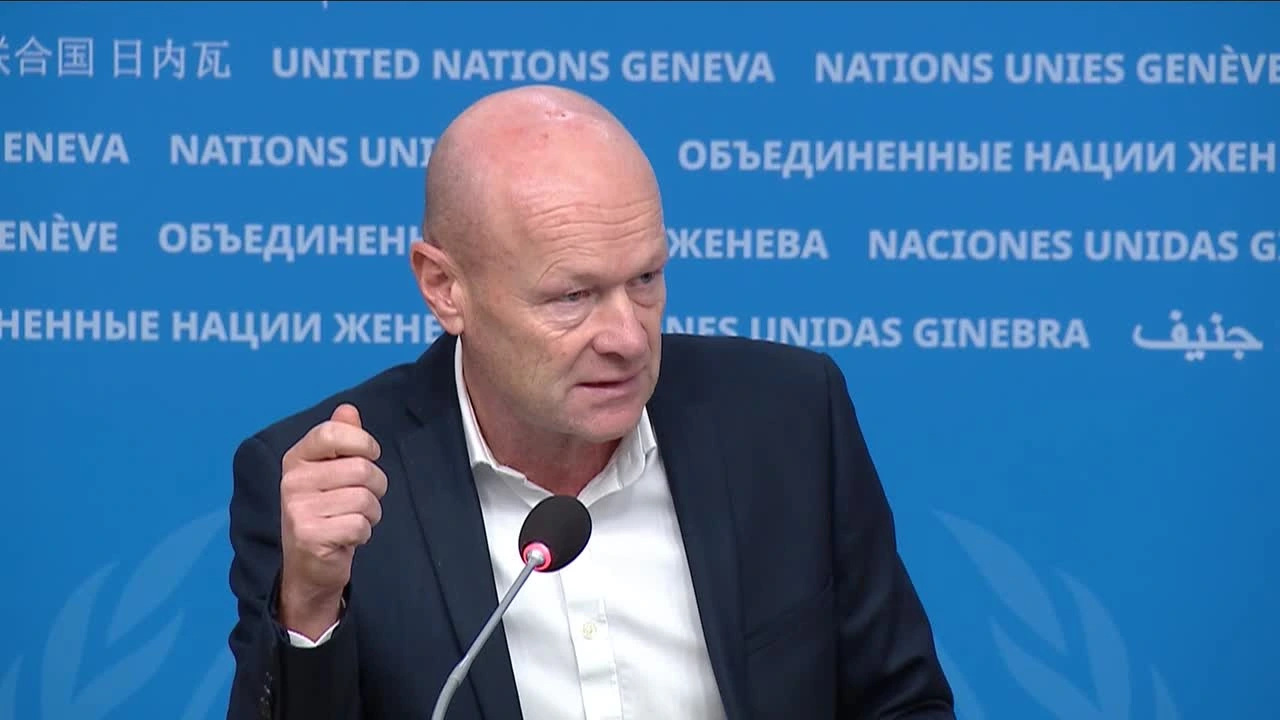
United Nations agencies warned at their Geneva briefing on 23 October that renewed fighting and blocked access in Yemen were increasing humanitarian needs, with effects extending across the Red Sea. The briefing record reported 3,836 Yemeni arrivals in Djibouti as of 17 October. On the African shore, the response involves reception, registration and public services organised by Djiboutian authorities with international partners. The dated arrival figure describes people recorded by that point; it is not a count of new crossings on the day of the briefing. [1]
The pressure behind those movements remains acute. At the Geneva briefing, OCHA spokesperson Jens Laerke described restrictions on movement into and out of Taiz since 3 October, while WFP warned that large numbers of residents had lost access to food assistance. The account also describes disrupted fuel and water supplies. Those reports concern conditions inside Yemen. Their relevance to Djibouti is the continuing need for reception and protection arrangements as people seek safety across the sea, with humanitarian agencies already adjusting their response to cross-border movements. [1]
UNHCR’s 19 October regional update places government institutions at the centre of the response in Djibouti. The National Office for Assistance to Refugees and Disaster Victims, ONARS, works with UNHCR on registration, while the Obock Refugee Coordination Forum provides a joint operational platform. Weekly meetings with refugee leaders take place in Markazi. At the reporting point, 1,522 people, about 40 per cent of the newly arrived population, had been fully registered and documented. Registration was continuing; the expected completion timetable was a plan for subsequent work. [2]
Markazi’s planned expansion also makes the division of responsibilities visible. UNHCR reported an additional 6.1 hectares intended to increase site capacity from 4,280 to 5,630 people, with further tents planned and security and fencing arrangements still required. The government-led response envisages access to health and education through national systems. The ministry introduced triple-shift schooling; 381 children were enrolled at that point. That links the reception site to public institutions beyond its boundary. The update records both an endorsed coordination framework and material work still needed to put the expanded arrangements into operation. [2]
The national legal framework reaches back to Djibouti’s refugee law of 5 January 2017. Its definition includes people compelled to leave their country by events seriously disturbing public order, alongside the persecution-based definition. The definition explicitly draws on the 1951 Geneva Convention and the 1969 Organisation of African Unity refugee convention. The law also establishes protection during the examination of an asylum claim and rules governing the authorities’ treatment of applicants. These provisions identify a national basis for protection in which crossing the border leads to an administrative relationship with the receiving state. The law’s existence does not establish that every newly arrived person has completed the relevant process. [5]
Article 14 lists fundamental rights, including education, work, access to courts and documentation, subject to the law’s conditions and implementing rules. Article 13 separately regulates applicants’ movement while status is unresolved. Reading those provisions together makes documentation and administrative status significant to everyday life after arrival. The present registration operation sits within that established legal structure. Providing a place to stay, recording a household and enabling the exercise of rights involve related responsibilities, each requiring institutions able to carry out their assigned functions. [5]
UNICEF’s 20 October account describes some of those functions at Markazi. The health post is managed by the Obock Hospital Medical Centre with partner support, and the agency reported more than 740 consultations for children under five since arrivals began. Its account also records health and nutrition activities, improvements to water points and emergency sanitation. These services connect the arrival response to local healthcare and infrastructure. Their organisation depends on Djiboutian public bodies, humanitarian partners and people from the refugee community who help residents find information and services. [3]
Refugee volunteers participate in managing water points, sharing information and supporting children’s activities, according to the same UNICEF account. It reported 540 children aged four to nine taking part in activities at a child-friendly space since September, with girls making up 69 per cent. The activities provide a place for play and expression after displacement. Those figures describe participation in a particular service. They also identify community members’ contribution to the practical work of reception alongside the responsibilities of government and humanitarian organisations. [3]
The more detailed UNICEF flash update, dated 19 October, records a serious sanitation gap: 43 emergency latrines were serving the site, approximately 89 people per latrine, against the Sphere benchmark of at most 20 cited in the report. Water supply depended on trucking, while the Directorate of Water and the national water and sanitation office, ONEAD, were leading work towards a network extension with UNICEF support. This is an infrastructure question with immediate consequences for living conditions and a longer-term question about the cost and reliability of provision. [4]
The flash update also reported a US$3 million six-month requirement for UNICEF’s response, 12 per cent funded as of 19 October. It described a weekly meeting between refugee leaders, ONARS and humanitarian actors to improve communication about conditions and services. The current response therefore combines a financing gap, unfinished infrastructure and an organised channel through which residents can raise concerns. Its progress will be reflected in documentation completed, functioning services and the delivery of the planned site improvements, while the report’s funding position remains tied to its stated date. [4]
- [1]United Nations UNifeed / UNTV Geneva. Geneva / Yemen Taiz city alert23 October 2026
- [2]UNHCR. Yemen Situation: UNHCR Emergency Update #5 — Djibouti, Somalia, Yemen19 October 2026; arrivals data through 17–18 October
- [3]UNICEF Djibouti; Sibylle Catherine Desjardins. “I want my children to be safe”: Yemeni families find refuge in Djibouti20 October 2026
- [4]UNICEF Djibouti. Humanitarian Flash Update No. 4: Refugee influx from Yemen19 October 2026
- [5]Republic of Djibouti, Journal officiel. Loi n° 159/AN/16/7ème L portant statut des réfugiés en République de Djibouti5 January 2017; consulted 24 October 2026
Did this publication help you understand the topic?
0 voluntary responses. Browser-based participation; responses are not a representative survey.
We welcome suggestions, contributions and recommendations.
Editorial standards ↗