On 2 November the African Development Bank said it had signed a $66 million financing agreement for the first phase of the Dandara solar and battery project in Egypt’s Qena Governorate. The announcement put a figure on the bank’s share of a deal whose immediate beneficiary is already named: EgyptAlum, the aluminium producer in Nag Hammadi, is to buy the electricity under a 25-year contract. The agreement finances a plant and a storage system that still have to be built. It does not record a disbursement or electricity delivered to the smelter. [1][3]
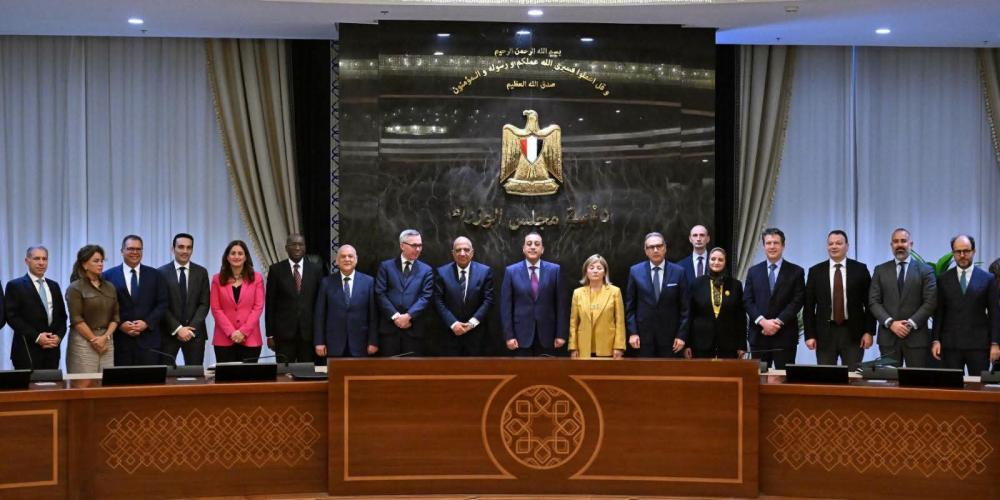
The Egyptian side assembled several parts of the deal at a ceremony witnessed by Prime Minister Mostafa Madbouly on 26 October at the government headquarters in the New Administrative Capital. The state-owned Metallurgical Industries Holding Company, EgyptAlum’s parent, describes three separate instruments. Scatec and three development banks signed preliminary financing terms. The Egyptian Electricity Transmission Company, the holding company and the project company signed an agreement covering connection, use of the network and oversight of the connection lines. The National Bank of Egypt and the project company signed an agreement for the bank to take a stake. These instruments bring different decisions under one project: who lends, who owns a share, and who makes it possible for the electricity to reach its buyer. [2][3]
Two days later Scatec reported signed loan agreements covering $217 million in first-phase debt against estimated capital expenditure of $271 million. The AfDB’s $66 million consists of $46 million from its ordinary resources and $20 million in concessional finance from the Clean Technology Fund. The EIB separately announced a loan of up to $90 million for the phase. That ceiling and the AfDB share describe parts of the financing, and should not be added to Scatec’s $217 million total as additional funds. The Egyptian holding company’s estimate of about $650 million refers to both phases, a different measure from the first phase’s debt or capital costs. [1][2][3][4]
Scatec says the National Bank of Egypt will hold 20 percent of the project and gives its own economic interest as 56 percent, counting both a direct stake and its share through an investment platform with the European Bank for Reconstruction and Development. The Egyptian bank’s role is thus distinct from the AfDB’s lending. The guarantees also operate at different points: Scatec describes Egyptian sovereign backing for the power purchase agreement, while the EIB says its loan is backed by an EU guarantee through the European Fund for Sustainable Development Plus. Those disclosures identify who supports which commitment; they do not establish how much a guarantor will ever have to pay. [3][4]
The transmission agreement matters because it gives a designated industrial buyer access to generation through the national network. The EBRD describes the purchase arrangement as take-or-pay, a structure that gives the project a contractual basis for revenue from the buyer. The public disclosures reviewed do not set out the full tariff, the terms for unused output or how connection costs will ultimately be recovered. Without those terms, the available documents do not show what the deal means for the wider network’s finances or for the bills of households and other businesses. [1][2][3][5]
The first phase is designed for 500 megawatts of solar output on the alternating-current side and 100 megawatt-hours of battery storage. The EIB’s 569 megawatts peak figure describes the first phase’s solar array on the direct-current side; it is another rating of the same phase. The battery is intended to shift some output into hours when the panels produce less or nothing. The Egyptian holding company says the two-phase development is intended to supply about a third of EgyptAlum’s electricity needs. That share is a project aim and depends on what is built, how it operates and how much electricity the plant uses. [1][2][4][6]
For EgyptAlum the attraction is also commercial. The holding company presents cleaner electricity as a way to maintain access to export markets with tightening environmental rules. The EIB project file explicitly links its financing to the EU’s Carbon Border Adjustment Mechanism. That link gives Egyptian actors a reason to secure lower-carbon electricity, but the finance package is not a ruling on the treatment of any particular shipment. The AfDB’s estimates of annual generation and carbon savings are likewise projections. Checking the industrial effect will require operating data showing how much electricity reaches EgyptAlum and which sources it displaces. [1][2][6]
In Qena the balance of benefits looks different from the one in the loan agreements. The AfDB forecasts about 2,500 jobs during construction and 23 permanent roles during operation. Neither figure is a hiring count. The EIB project file records an October 2025 hearing in Nag Hammadi and says the assessment materials for the first phase were disclosed in March 2026. It describes a planned community liaison officer and a process to handle grievances during the project. That gives residents an identifiable route for raising construction or operating concerns; the bank’s description does not establish how those concerns will be resolved in practice. [1][5][6]
The next milestone that matters to the smelter is commercial operation, which Scatec targets for the first half of 2028. The second phase has its own timetable: Scatec expects construction to begin in the first half of 2027. Before power can reach the buyer, the project company must build the generation and storage facilities and the network connection must work. The November announcement makes the first phase’s funding more concrete. What the deal delivers in Qena will be measured by electricity supplied, the terms under which it moves through the grid, and how the commitments made to nearby communities are carried out. [1][2][3][6]
- [1]African Development Bank Group. Egypt: AfDB invests $66 million in Dandara solar and battery project2026-11-02
- [2]Metallurgical Industries Holding Company. شهد رئيس مجلس الوزراء توقيع ثلاث اتفاقيات بشأن تمويل وتنفيذ مشروع “دندرة” للطاقة الشمسية2026-10-26
- [3]
- [4]European Investment Bank. EIB provides up to $90 million for one of the largest solar and battery projects in Egypt and Africa2026-10-29
- [5]European Bank for Reconstruction and Development. Dandara Solar Project: project disclosureUndated disclosure page; accessed 2026-11-05
- [6]European Investment Bank. DANDARA SOLAR PV AND BESSProject record with signature milestone 2026-10-28; accessed 2026-11-05
Did this publication help you understand the topic?
0 voluntary responses. Browser-based participation; responses are not a representative survey.
We welcome suggestions, contributions and recommendations.
Editorial standards ↗