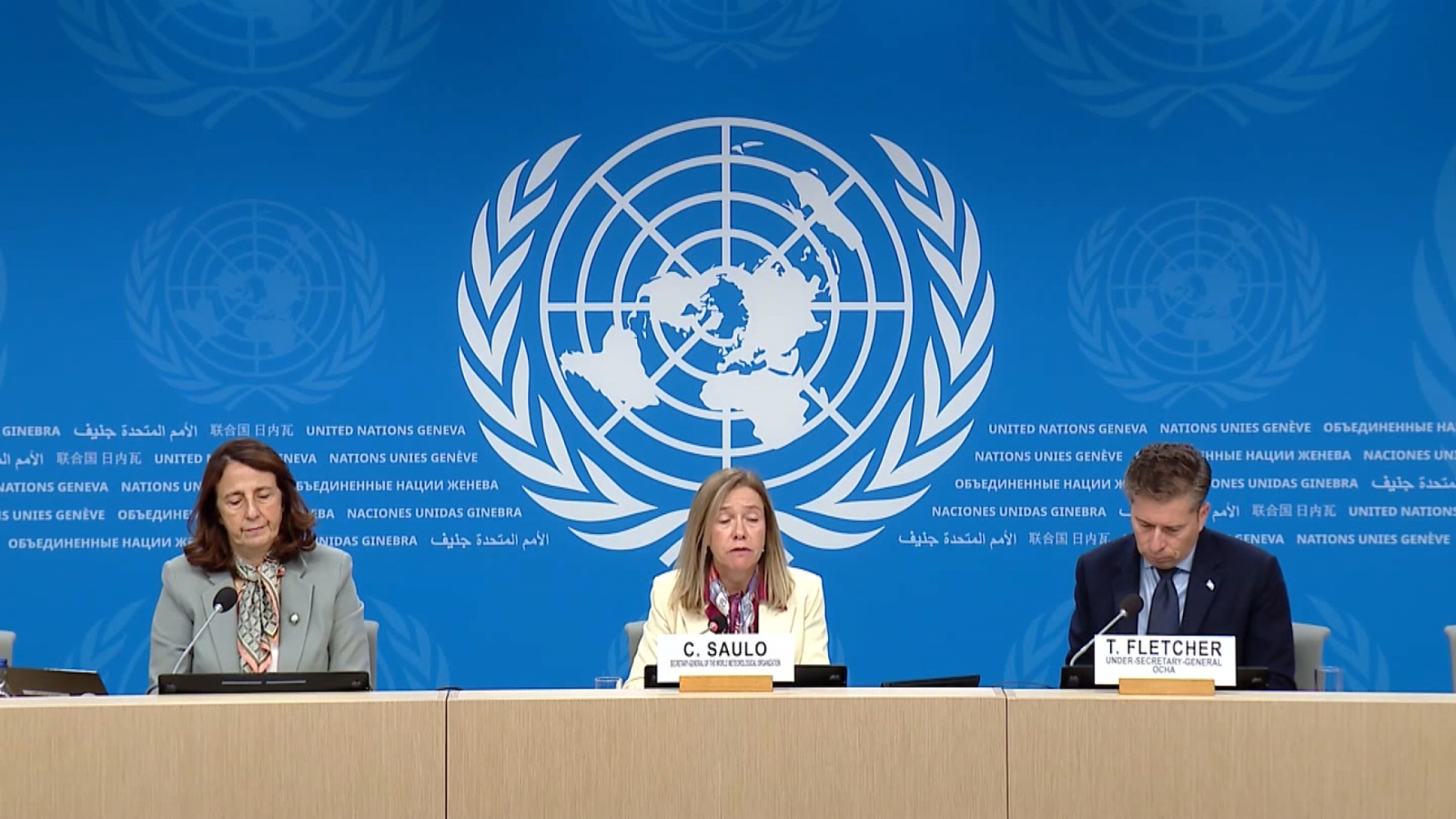
A new El Niño warning issued in Geneva on 21 October 2026 has sharpened the urgency of preparedness decisions in Somalia and other exposed African countries. World Meteorological Organization chief Celeste Saulo and UN humanitarian chief Tom Fletcher appealed for action ahead of the expected peak later this year. Fletcher said he had released more than US$50 million from the Central Emergency Response Fund for eleven countries, naming Chad, Ethiopia, Somalia and South Sudan among the recipients. He described urgent funding and pre-positioned supplies as priorities in the Horn. His announcement reports a financing decision; it gives no country-by-country breakdown of that total or accounting of assistance already received by households. [1]
The scientific trigger is an updated seasonal outlook published on the same day. WMO forecasts a mean sea-surface temperature anomaly of about 3.8°C in the tropical Pacific’s Niño 3.4 region during November 2026–January 2027, with warming peaking around December. That figure concerns a defined ocean-monitoring region and period. It is not a forecast of a 3.8°C rise in African air temperatures. WMO describes a strengthening event whose effects will vary across regions. For public authorities, the forecast establishes a changing risk environment in which decisions about food, water and emergency resources must be made before the season’s full consequences are known. [2]
Saulo identified a particular contrast in those risks: parts of East Africa face greater likelihood of unusually heavy rain, while Southern Africa faces increased risk of dry conditions affecting farming and water availability from November. She stressed the importance of regional and national forecasts for deciding where and when to act. Refugees and displaced communities are among those she identified as particularly exposed because housing and essential services are already under pressure. Those differences matter for spending choices: flood preparedness and protection of drought-affected livelihoods require different supplies, timing and locations. A continental warning therefore has to be translated through institutions with knowledge of local conditions. [3]
In Somalia, that translation has an existing regional foundation. ICPAC and national meteorological services issued their October–December outlook in August, following the Greater Horn climate forum in Kigali. Their forecast assigned a 90 percent probability of above-normal seasonal rainfall to southern Ethiopia, central and southern Somalia and north-eastern Kenya. October–December rainfall accounts for up to 70 percent of annual rainfall in parts of those countries. The season supports livelihoods as well as posing danger. The regional assessment placed responsibility for more detailed country advisories with national services and recommended following shorter-range updates as conditions developed. [4]
FAO’s Somalia warning of 1 September describes work by its water and land information programme, SWALIM: mapping flood-prone areas and safe higher ground, identifying evacuation routes and vulnerable river-break points, and estimating exposed populations. FAO said the information was being shared under government leadership. These products connect scientific agencies, Somali authorities and humanitarian organisations to practical choices about where resources can be positioned and which routes people can use to reach safety. [5]
River conditions also affect the timing of those choices. FAO cautioned that local rainfall easing does not necessarily end flood danger because water generated upstream can continue moving downstream. It identified short dry intervals as possible opportunities for assessment and delivery before further rain. Preparedness therefore involves an evolving sequence of river observations, transport access and operational decisions, with the usefulness of a warning depending on whether organisations can reach threatened communities while routes remain usable. [5]
At the Country Humanitarian Forum in Mogadishu on 23 September, the United Kingdom announced £5 million for Somalia’s preparations. Details published the next day divide the allocation equally between two programmes: Caafimaad Plus, led by Action Against Hunger, supports essential health, nutrition, water and protection services; RESTORE, delivered through FAO, the International Organization for Migration and World Vision, supports warnings, relocation, flood protection and cash assistance. These are intended uses through named programmes. [6]
The embassy’s targets include essential services for up to 600,000 people and maintaining up to 71 supported health facilities. These planned coverage figures attach identifiable commitments to the funding announcement. Maintaining facilities during floods means preserving access to care while damaged routes and displacement can increase need. The arrangement combines additional external finance, implementing organisations and coordination alongside Somali government and humanitarian partners. Subsequent programme accounts can establish where those commitments become services available to communities. [6]
West and Central Africa face a different combination of risks. In a September regional note, UNDP called for anticipatory investment that accounts for conflict and obstacles to humanitarian access. It reported disagreement among rainfall forecasting systems for the Sahel and urged national-level assessment through the AGRHYMET regional process. Its proposed response included identifying community-based partners able to operate where access is constrained. This matters to the allocation debate because a single climate signal cannot describe the conditions under which assistance reaches people. The geography of insecurity, available routes and local operating capacity also influences which interventions are possible. [7]
UNDP’s regional framing places climate pressure within an existing political and economic setting. Its call asked governments and donors to combine climate information with conflict and access indicators when arranging anticipatory finance. The approach addresses a distributional problem: exposure to a weather hazard and capacity to obtain assistance do not necessarily coincide. Funding choices can therefore change whose losses are prevented and whose needs remain difficult to reach. The September note’s proposed mechanisms—national assessment, community partnerships and access-sensitive financing—remain relevant to the new October warning, while its older forecast figures should be read in their original reporting period. [7]
The 21 October appeal gives renewed urgency to the current Deyr season. Regional forecasts, government-led preparedness and named funding commitments identify the institutions responsible for protecting livelihoods and sustaining access to essential services as conditions develop. [1][4][5][6]
- [1]United Nations / UNifeed, UNTV CH. Geneva / El Niño presser2026-10-21
- [2]World Meteorological Organization. Global Seasonal Climate Update for November-December-January 20262026-10-21; outlook November 2026–January 2027
- [3]World Meteorological Organization. El Niño and humanitarian action — statement by Celeste Saulo2026-10-21
- [4]IGAD Climate Prediction and Applications Centre. The Greater Horn of Africa is expected to experience a wetter-than-normal October–December 2026 season as El Niño strengthens2026-08-18; seasonal outlook October–December 2026
- [5]Food and Agriculture Organization of the United Nations. Strong El Niño weather condition raises risk of severe Deyr flooding in Somalia, FAO warns2026-09-01
- [6]British Embassy Mogadishu. UK announces £5 million to help Somali communities prepare for El Niño flooding2026-09-24; announcement at forum 2026-09-23
- [7]United Nations Development Programme. UNDP calls for urgent anticipatory investment as El Niño worsens an already conflict-driven crisis in West and Central AfricaPage dated 2026-09-14; release dateline 2026-09-15
Did this publication help you understand the topic?
0 voluntary responses. Browser-based participation; responses are not a representative survey.
We welcome suggestions, contributions and recommendations.
Editorial standards ↗