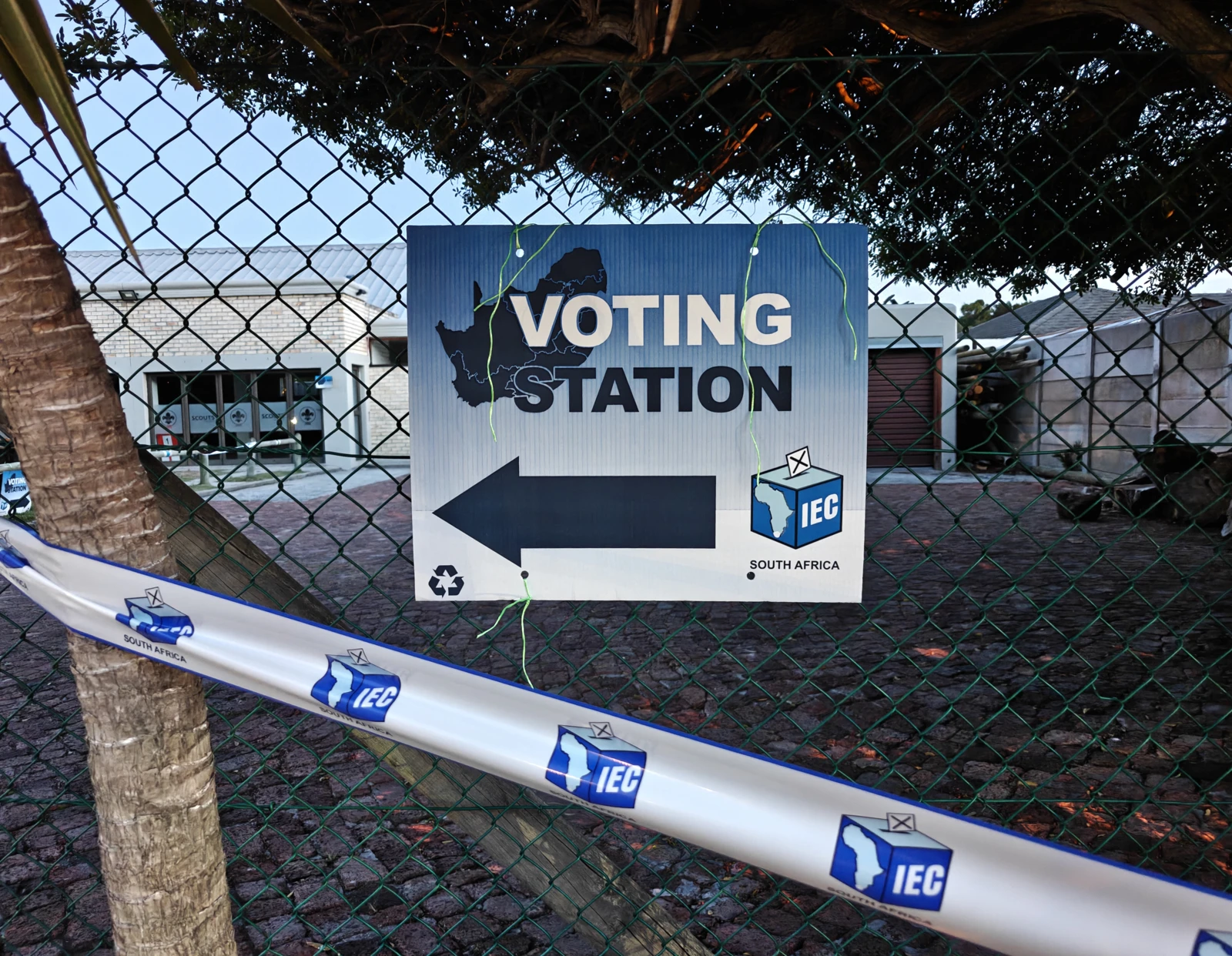
South Africa’s Electoral Commission announced the final results of the 4 November municipal election in Midrand on 8 November. Two days later, Cooperative Governance and Traditional Affairs Minister Velenkosini Hlabisa said the 14-day period for constituting councils would begin on 11 November following official publication of the results. Where no party has an outright majority, councillors now have to find enough support to elect officeholders and make decisions about services and spending. Hlabisa announced the timetable; individual councils still have to hold their meetings. [1] [2] [5] [7]
The announcement closes the provisional national count covered in the first version of this report. On 6 November, the commission said 91 percent of the results process had been completed nationally and that results had been finalised in 150 of 213 municipalities, excluding district councils from that interim measure. At the 8 November declaration, commission chair Mosotho Moepya reported that the African National Congress had received 30.76 percent of the vote and the Democratic Alliance 24.64 percent. Those figures describe the national result reported at the declaration. Which party can pass a budget depends on the distribution of seats and the votes taken in each council. [1] [4] [7]
The ballots counted in that process included votes cast before election day. On 3 November the Electoral Commission said it had completed two days of special voting, including at voting stations and through home visits, and that the ballots would be counted alongside those cast on 4 November. That detail matters for understanding who could take part: the election included a procedure for approved voters who could not vote in the ordinary way on the day. The national declaration records the outcome of the count; it does not tell us which governing arrangements those votes will produce in individual municipalities. [1] [3] [7]
One subsequent Electoral Commission decision concerns a single voting district. On 10 November the commission announced a revote for 18 November at Bongani Gemeenskapsaal in Ward 3 of Siyancuma Local Municipality in the Northern Cape. The announcement sets out a new voting date for registered voters in that district. It came after the national declaration and concerns a specific local poll. The revote had yet to take place at the time of this update. [1] [8]
Hlabisa’s immediate concern was councils where no party won an outright majority. The party with the most seats can still need votes from other parties or councillors to make decisions. The minister said he would meet provincial officials responsible for local government to discuss the transition. President Cyril Ramaphosa, speaking at the results announcement, also urged parties to constitute councils promptly and pass budgets on time. These statements set out what national officials expect. They leave the local decisions to councillors, whose agreements and votes will determine how those expectations are carried out. [2] [5] [7]
The reason the first meetings matter extends beyond who occupies an office. Chapter 7 of the Constitution gives municipal councils executive and legislative authority. It requires municipalities to organise their administration, planning and budgets around basic community needs, and it sets sustainable service provision among the objects of local government. It also recognises municipalities’ financial and administrative capacity. A commitment to better services has practical weight when the council can identify the resources, the municipal function involved and the decision needed to put it into effect. [5] [7]
The Constitution reserves decisions on budgets, municipal rates and other taxes, and borrowing to the council itself. It also requires a majority of all council members to support those decisions. That gives the distinction between the largest party and a working majority a financial consequence. An agreement to elect officeholders may help a council start work. Sustaining support for a budget is a separate decision, with consequences for how much a municipality can spend and which services it can fund. Budget approval, in turn, authorises a plan; it does not establish that work has been procured, paid for or delivered. [2] [7]
Residents have ways to follow those choices. The Constitution requires municipal councils to conduct their business openly, subject to reasonable grounds for closing some proceedings. It also makes community involvement an objective of local government. The record of the first council sitting can establish who took office; the budget, meeting records and later spending records answer different questions about which commitments have acquired funding and whether money was used. Those distinctions matter when households are judging whether a political agreement changes a service they rely on. [6] [7]
The South African Local Government Association said on 10 November that it would roll out an induction programme after councils had been constituted. The programme is intended to help councillors carry out their representative, legislative and oversight duties. The association also urged parties in councils without a majority to preserve continuity in services while they negotiate. These are plans and requests. Their local significance will become clearer when council records show who has responsibility for particular decisions and what oversight arrangements elected representatives actually use. [2] [6] [7]
The vote and the declaration establish the electoral mandate. The next public record is what councillors do with it: who takes office, which spending proposals attract majority support, and what residents can see of the decisions that follow. For municipalities where parties must share power, those records offer a way to judge whether the arrangement keeps council business moving and gives basic services a place in funded plans. [1] [2] [6] [7]
- [1]SAnews / Government Communication and Information System. IEC declares LGE 2026 Free and Fair8 November 2026; Electoral Commission final-results announcement
- [2]SAnews / Government Communication and Information System. Hlabisa urges parties to prioritise stability in hung municipalities10 November 2026
- [3]Electoral Commission of South Africa / Government of South Africa. Electoral Commission on conclusion of 2026 Local Government Elections Special Voting3 November 2026; election day 4 November
- [4]SAnews / Government Communication and Information System. IEC achieves 91% completion rate for local election results6 November 2026; commission update as at 17:00 SAST
- [5]SAnews / Government Communication and Information System. President urges parties to put service delivery ahead of political interests8 November 2026; address at the results announcement
- [6]SAnews / Government Communication and Information System. Focus shifts to building stable, accountable municipal councils10 November 2026; reports the SALGA statement
- [7]Republic of South Africa / Government of South Africa. Constitution of the Republic of South Africa, 1996, Chapter 7: Local Government1996; amended web text, sections 151–160, accessed 11 November 2026
- [8]SAnews / Government Communication and Information System. IEC orders a revote at Bongani Gemeenskapsaal Voting District10 November 2026; scheduled voting on 18 November 2026
Did this publication help you understand the topic?
0 voluntary responses. Browser-based participation; responses are not a representative survey.
We welcome suggestions, contributions and recommendations.
Editorial standards ↗