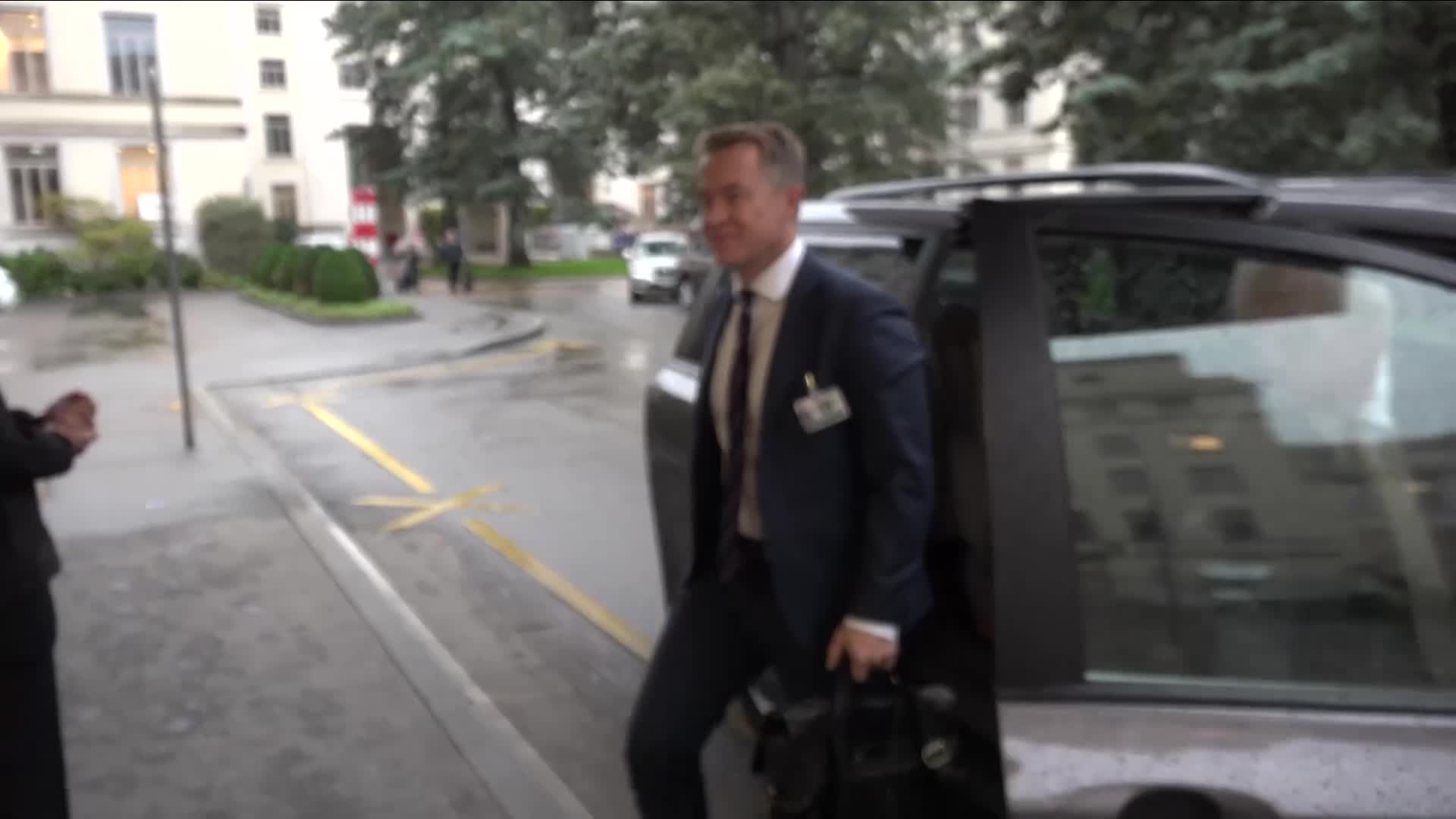
International mediators met in Geneva on 21 October 2026 to coordinate efforts towards a ceasefire in Sudan and discuss a Sudanese-led political process. UN envoy Pekka Haavisto outlined two sessions: de-escalation and inclusive dialogue. Switzerland co-hosted the gathering with his office. The agenda connects efforts to stop hostilities with civilian participation in shaping the country’s political future. [1]
Neither the Sudanese government nor the Rapid Support Forces was represented, according to UN coverage: this was a mediators’ coordination forum. The Quad comprises Egypt, Saudi Arabia, the United Arab Emirates and the United States; the Quintet comprises the African Union, IGAD, League of Arab States, European Union and United Nations. Their coordination concerns diplomatic channels. The opening record establishes no ceasefire agreed by Sudan’s belligerents. Haavisto said a transition should reflect Sudan’s diverse voices and experiences. [1]
Switzerland’s announcement on 20 October places the meeting within consultations that began in June 2024. It names Sudan’s neighbours, permanent Security Council members and states involved in peace initiatives among the participants. The process brings together actors whose mandates and channels of access differ. Coordination is intended to make those initiatives reinforce each other and support de-escalation. That institutional purpose helps explain why a meeting outside Sudan can matter to its political future: states and organisations are deciding how they will engage Sudanese actors and connect their respective initiatives. [2]
The Swiss statement also identifies a humanitarian discussion preceding the political meeting. UN agencies and humanitarian organisations were to present conditions and access problems to delegations. Placing that discussion alongside peace diplomacy gives the immediate needs of civilians a place on the coordination agenda. Switzerland reports allocating about CHF217 million in humanitarian assistance to Sudan and the wider region since the war began, covering food security, displaced people and civilian protection. The regional scope of that figure matters: it is a reported allocation across a crisis extending beyond Sudan’s borders. [2]
The route through which Sudanese political proposals enter the process has its own recent chronology. IGAD’s 6 August Quintet statement traces exploratory consultations in Addis Ababa on 3–5 June, followed by leadership discussions with Sudanese blocs and parties beginning on 29 July. Technical exchanges were examining proposals submitted during the exploratory round. Those arrangements identify more than one channel of participation. Political leaders could put positions before the mediators while technical discussions considered their substance. The Quintet linked sustained consultation to the confidence and legitimacy required for a Sudanese-owned political process. [3]
That stated approach puts public authority and participation together. The same August document affirmed Sudan’s sovereignty, unity and territorial integrity and rejected parallel governing structures. It also committed the Quintet to continued engagement with Sudanese stakeholders. These positions identify the political order the mediators sought to support and the consultative means through which they proposed to advance it. Their relevance to Geneva lies in the connection between international coordination and the proposals already circulating among Sudanese constituencies. The legitimacy of a future political arrangement remains bound up with who can participate in shaping it. [3]
A subsequent Good Offices mission to Khartoum widened the documented sequence of meetings. In its statement published on 14 September, the Quintet recorded discussions with the Transitional Sovereignty Council’s leadership, the prime minister and foreign-ministry officials. It also met political and civilian groups, including the Democratic Bloc, and heard from a committee working on conditions for Sudanese dialogue. The mission ended with independent women’s and youth groups. These are the constituencies identified by the mediators themselves, whose account describes an effort to connect engagements outside Sudan with initiatives taking shape inside the country. [4]
The mission’s stated objective was a credible political track leading towards democratic civilian government. That objective gives the consultations a consequence beyond arranging diplomatic meetings: they concern the institutions through which Sudanese people would exercise political power. The September statement links the political process to concrete steps to protect civilians and end hostilities. Its account records consultation and an intended direction of travel. It supplies no electoral mandate for the groups consulted and no basis for treating the recorded meetings as an exhaustive representation of Sudanese society. [4]
The EU’s account makes the relationship between diplomatic tracks explicit. In a 14 September statement, marked for checking against delivery, Special Representative for the Horn of Africa Annette Weber described a Quintet political track and a Quad-led security track. She called for effective connections between them and for a mechanism linking Sudanese actors inside and outside the country, particularly women, youth and civil society. A technical team drawn from the five Quintet institutions was working on this ambition, according to the statement. The proposed mechanism concerns whose political proposals can travel between otherwise separate arenas. [5]
Weber also identified decisions needed around an eventual agreement: arrangements for monitoring, separation of forces, managing violations, and humanitarian and economic access. These are specific institutional tasks attached to a prospective settlement. Her statement argued that preparation should begin before a political opening emerges. The connection to civilian participation is practical as well as constitutional: people’s ability to return, obtain services and take part in political life depends partly on the security and access arrangements that accompany negotiations. The September text describes preparations and proposals, rather than completed implementation. [5]
An African Union Commission statement of 31 August places a similar emphasis on the relationship between sovereignty and civilian institutions. Welcoming a dialogue initiative supervised by Sudanese elders, it recommended consultations encompassing civil, political and wider societal actors. It identified legitimate civilian government, a single national security architecture and peaceful mechanisms for resolving differences as the intended endpoint. Those conditions matter to the meaning of Sudanese ownership: the Commission’s stated aim includes institutions through which political and social differences can be addressed. [6]
The United Kingdom’s position before Geneva likewise connected a humanitarian truce, permanent ceasefire and civilian-led political process. Speaking at the Security Council on 16 October, Kate Foster welcomed closer Quad–Quintet coordination and said national dialogue should give civilians a meaningful voice. The UK also supported strengthening the Sudan sanctions regime. These remain national diplomatic positions; their inclusion in a speech does not constitute a Council decision. Alongside the African and regional records, they show the distinct channels through which external governments and multilateral institutions seek to influence the terms of peace. [7]
Geneva’s agenda joins de-escalation to the question of political authority. The AU’s stated endpoint remains legitimate civilian institutions and peaceful resolution of Sudanese differences. [1][6]
- [1]United Nations / UNifeed, UNTV CH. Geneva / Sudan consultative meeting2026-10-21; arrivals in shotlist dated 2026-10-20
- [2]Swiss Federal Department of Foreign Affairs. Switzerland and UN strengthen coordination of peace efforts in Sudan2026-10-20
- [3]Intergovernmental Authority on Development. Quintet Statement on Ongoing Consultations with Sudanese Political Stakeholders2026-08-06
- [4]African Union, Political Affairs, Peace and Security. Statement of the Quintet Visit to Khartoum, Sudan2026-09-14
- [5]European External Action Service. EU Statement — UN Security Council: Informal Interactive Dialogue on Sudan2026-09-14; text marked check against delivery
- [6]African Union Commission. African Union Commission Welcomes Sudanese-Sudanese Dialogue Initiative2026-08-31
- [7]UK Foreign, Commonwealth & Development Office. As we remember the victims of El Fasher…: UK statement at the UN Security Council2026-10-16; delivered by Kate Foster
Did this publication help you understand the topic?
0 voluntary responses. Browser-based participation; responses are not a representative survey.
We welcome suggestions, contributions and recommendations.
Editorial standards ↗